Can you park a campervan overnight in Norway?
Often yes, but not anywhere. The rules for sleeping in a campervan in Norway in 2026, covering roadside parking, 150 m, two days, rest areas, Lofoten and signs.
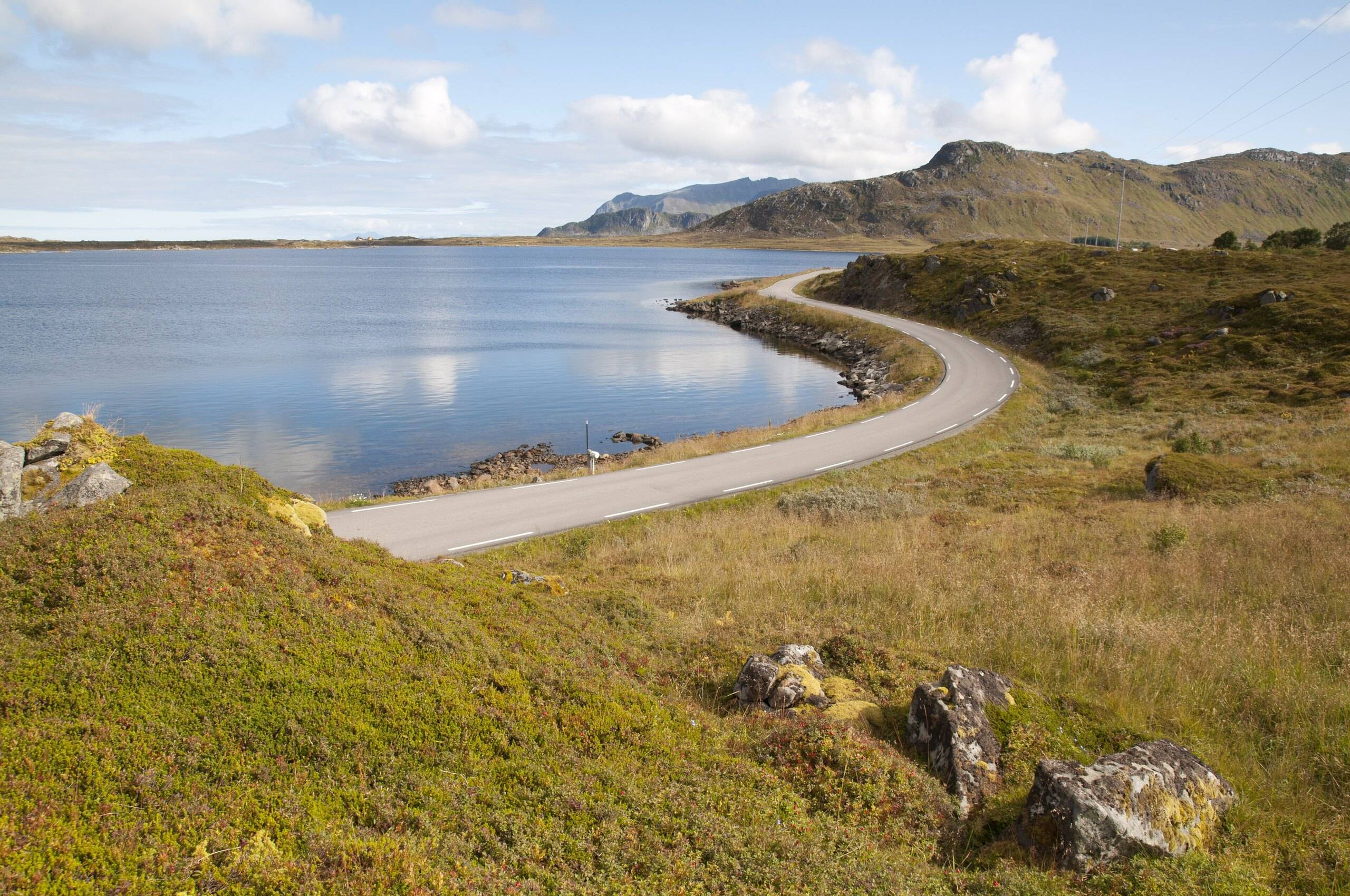
The short answer (status: October 2026): yes, in many places. You may park a campervan or motorhome overnight beside a public road in open country, as long as it causes no significant damage or inconvenience. But the right to roam is a right for people on foot, not a parking right. Signs, private roads and local regulations override it in exactly the places most people want to sleep.
The rules at a glance
| Question | Answer |
|---|---|
| What lets you park? | Friluftsloven § 4: parking in open country (utmark) by a public road, if it causes no significant damage or inconvenience |
| Can you drive off-road to a spot? | No. Motor traffic in open country is prohibited |
| Distance from houses | At least 150 m from an inhabited house or cabin |
| How long in one place | As a main rule, no more than two days |
| Rest areas | Official sources disagree. The sign on site decides |
| Lofoten | No general camper ban. 12 named car parks are closed to motorhomes from 24:00 to 06:00 |
| Open fires | Banned from 15 April to 15 September in or near forest and open country |
The right to roam is a walking right
Norway's allemannsretten is written into the Outdoor Recreation Act. In open country, anyone may travel on foot all year, as long as they do it considerately and with due care. The same paragraph covers horses, sledges and bicycles. It does not mention motor vehicles. Instead it refers them to the separate act on motor traffic in open country.
So "the right to roam lets me sleep anywhere in my van" is a misunderstanding. What the right to roam means for tents is explained in our article Where can you camp in Norway?.
The rule that actually lets you park
The paragraph that matters for a camper is § 4. The owner of a private road may forbid driving and parking on it. By a public road, parking in open country is permitted, as long as it causes no significant damage or inconvenience.
The traffic rules apply on top of that. You may not park in front of an entrance or exit, or in a passing place (møteplass) along the full width of the widened road. On a priority road with a speed limit above 50 km/h, you may not park on the carriageway.
In practice: use a gravel lay-by or hard standing beside a public road, block nothing and leave no tracks. Parking is not the same as camping. The law lets the vehicle stand. It says nothing about awnings, chairs or a barbecue.
You may not drive to the spot
Motor traffic in open country is not allowed unless the law or a decision made under it permits it. A holiday is not one of the exceptions.
The definition catches many people out. A track in open country that was not built for driving by car counts as open country itself, and so does a built road that is not cleared of snow. Driving 50 metres down a track to a spot by the water is prohibited.
The law is changing. A new Motor Traffic Act of 19 June 2026 will replace the 1977 act on a date the King decides, so paragraph numbers will move.
150 metres and two days
For tents, the Outdoor Recreation Act sets a minimum distance of 150 metres from an inhabited house or cabin. It also limits a stay to two days in one place without the owner's consent, except in the high mountains or far from habitation.
The paragraph does not name vehicles. However, the Norwegian Environment Agency says the same rules apply when you camp with a motor vehicle: at least 150 metres from an inhabited house or cabin and, as a main rule, no more than two days in the same place. It also says camping with a car or motorhome in the terrain is not allowed. Plan around that reading.
Rest areas: two official answers
This is where official Norwegian sources contradict each other:
- The Norwegian Public Roads Administration says ferry terminals and rest areas are not intended for overnight stays.
- NAF, the Norwegian motoring organisation, says that in principle you have the right to park and overnight at rest areas, but that there is usually a time limit of one day.
- In Lofoten, the road authority introduced two- and four-hour parking limits at a number of E10 rest areas in July 2025 as a pilot. Whether it continued in 2026 is unknown, so read the sign.
- 24-hour rest stops (døgnhvileplass) are reserved for lorry drivers who must take their rest periods. They are not meant for campers.
"Not intended for" describes a purpose. It is not a ban. A local sign, on the other hand, is a ban. The safe bet is a single short night at most: arrive late, leave early, set up nothing outside the vehicle, and treat any sign as final.
Lofoten: what the regulation really says
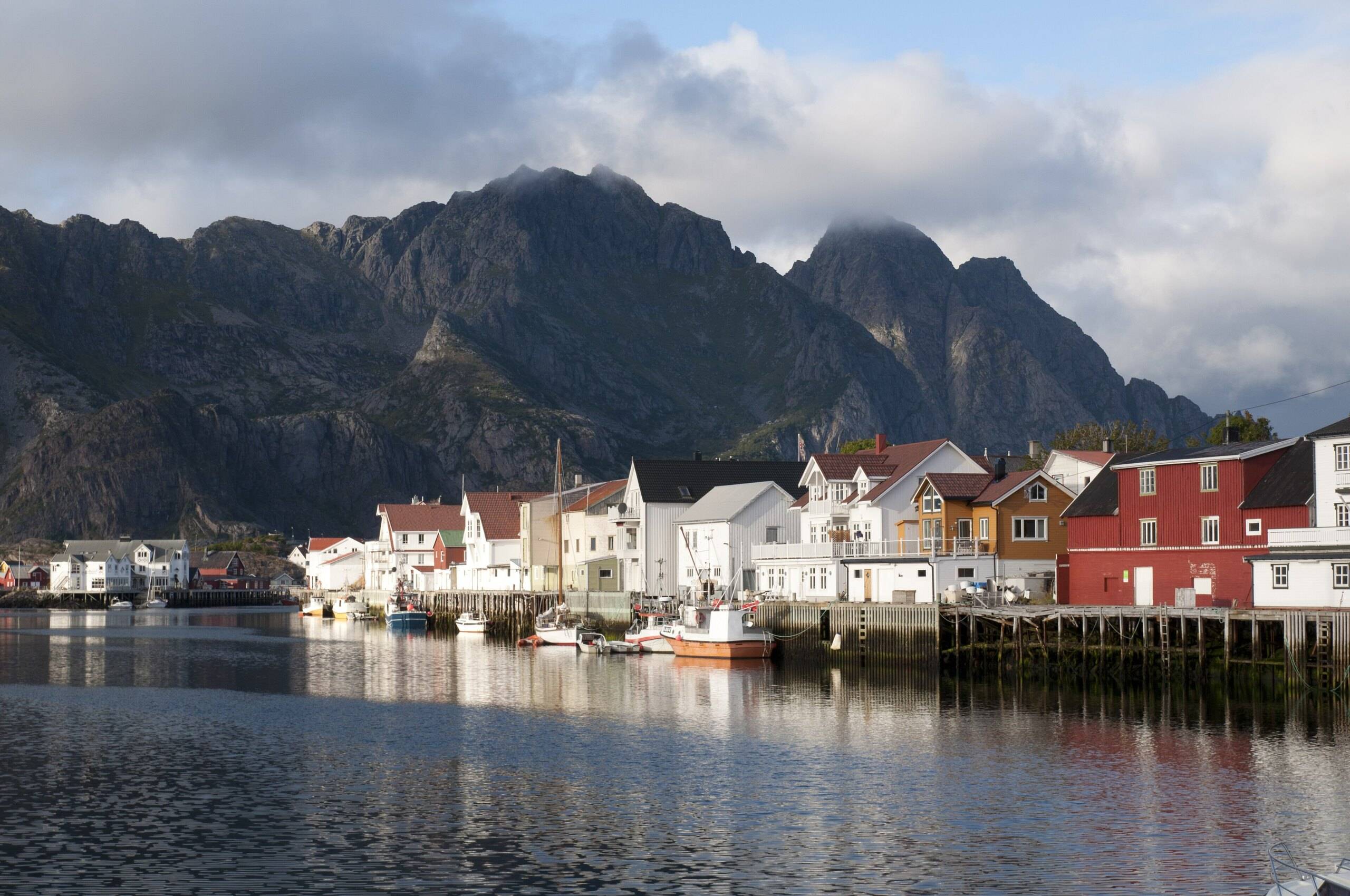
Lofoten has its own outdoor regulation, made under the Outdoor Recreation Act. On parking, it says only this: between 24:00 and 06:00 you may not park a caravan or motorhome at twelve named car parks, four in Vågan and eight on Værøy. Flakstad and Røst have no motorhome provisions at all. The regulation's tent bans are separate. Tenting at Haukland beach is banned all year.
The widely shared claim that "from 2026 motorhomes may only overnight at campsites in Lofoten" is not in the regulation. Rest areas along the E10 can still carry their own time-limit signs, and those signs apply. For planning the archipelago itself, see Lofoten.
Places that ban sleeping outright
The big hiking car parks are run tightly:
- Preikestolen: the car park operates around the clock, and camping or sleeping in vehicles is strictly forbidden.
- Trolltunga: the P1 Tyssedal car park states "No overnight sleeping, camping, BBQs or open fires". The road from P1 to P2 is too narrow for camper vans, and its maximum vehicle length is 5.2 metres.
- Stegastein: from 2026, parking is paid and limited to half an hour.
The motorhome sign that means two opposite things
The motorhome symbol on a supplementary plate means different things depending on the sign above it. Under a blue "P" sign (552), the parking is reserved for motorhomes. Under a "No parking" (372) or "No stopping" (370) sign, the prohibition applies to motorhomes. Many travellers read the symbol as "campers not welcome" and drive away from a legal camper space.
Toilet, grey water and fire
- Empty toilets and waste only at approved dump stations. The road authority points to bobilplassen.no for finding them.
- Do not use public toilets as a dump point. The Aurlandsfjellet scenic route, for example, says plainly that emptying motorhome toilets in its toilets is not permitted.
- Under the Pollution Control Act, emptying a tank into a ditch is a pollution offence. The possible penalties include fines and imprisonment.
- From 15 April to 15 September, lighting a fire in or near forest and other open country is prohibited unless the municipality allows it.
What this article leaves out
Above are the core rules, and they are enough to avoid the worst mistakes. Our guide Where can I sleep with a camper in Norway? covers the rest:
- every Norwegian parking sign you will meet;
- the Lofoten regulation paragraph by paragraph, including all the named car parks;
- how to judge a roadside spot in ninety seconds;
- what to do when someone asks you to move;
- a nightly method for finding a legal spot without relying on spot lists that go out of date.
FAQ
Is wild camping with a motorhome allowed in Norway?
Not in the sense of driving into nature. You may park beside a public road in open country if it causes no significant damage or inconvenience. Stay at least 150 m from inhabited houses and, as a main rule, no more than two days in one place. Signs and local rules take precedence.
Can I sleep at a rest area (rasteplass)?
The road authority says rest areas are not intended for overnight stays. NAF says it is in principle allowed, usually with a one-day limit. If a sign sets a time limit or bans overnight stays, the sign applies.
Has Lofoten banned campers outside campsites from 2026?
No. The Lofoten regulation bans motorhomes only at twelve named car parks, between 24:00 and 06:00. Rest-area signs along the E10 can add their own time limits.
Can I sleep at a ferry terminal?
The road authority says ferry terminals are not intended for overnight stays. Follow the signs on site.
Sources
- lovdata.no/lov/1957-06-28-16/§4 · accessed 7 October 2026
- lovdata.no/lov/1977-06-10-82/§3 · accessed 7 October 2026
- miljodirektoratet.no/ansvarsomrader/friluftsliv/friluftsliv-og-… · accessed 7 October 2026
- lovdata.no/dokument/LF/forskrift/2021-06-22-2418 · accessed 7 October 2026
- lovdata.no/forskrift/2015-12-17-1710/§3 · accessed 7 October 2026
- lovdata.no/lov/1957-06-28-16/§2 · accessed 7 October 2026
- lovdata.no/forskrift/1986-03-21-747/§17 · accessed 7 October 2026
- lovdata.no/lov/1977-06-10-82/§2 · accessed 7 October 2026
- lovdata.no/dokument/NL/lov/2026-06-19-53 · accessed 7 October 2026
- lovdata.no/lov/1957-06-28-16/§9 · accessed 7 October 2026
- vegvesen.no/en/traffic-information/traffic-information/drive-sa… · accessed 7 October 2026
- naf.no/bilferie-og-reise/reisetips/camping-bobil-overnatte-ferie · accessed 7 October 2026
- nasjonaleturistveger.no/no/presse/nyheter/2025/parkeringskaos · accessed 7 October 2026
- vegvesen.no/en/vehicles/professional-transport/driving-time-and… · accessed 7 October 2026
- preikestolen365.com/parking-at-preikestolen · accessed 7 October 2026
- trolltunga.com/parkering-og-transport/parkering · accessed 7 October 2026
- kommunikasjon.ntb.no/pressemelding/18968959/tek-ytterlegare-gre… · accessed 7 October 2026
- lovdata.no/dokument/SF/forskrift/2005-10-07-1219 · accessed 7 October 2026
- nasjonaleturistveger.no/en/routes/aurlandsfjellet · accessed 7 October 2026
- lovdata.no/dokument/NL/lov/1981-03-13-6 · accessed 7 October 2026